
The Island House: Caribbean Villas in the Club Years
Beach villas were the other half of every club brochure. What the archive says about Anguilla, Turks and Caicos and the Dominican Republic, the hurricane question, and one club that never got past its first house.
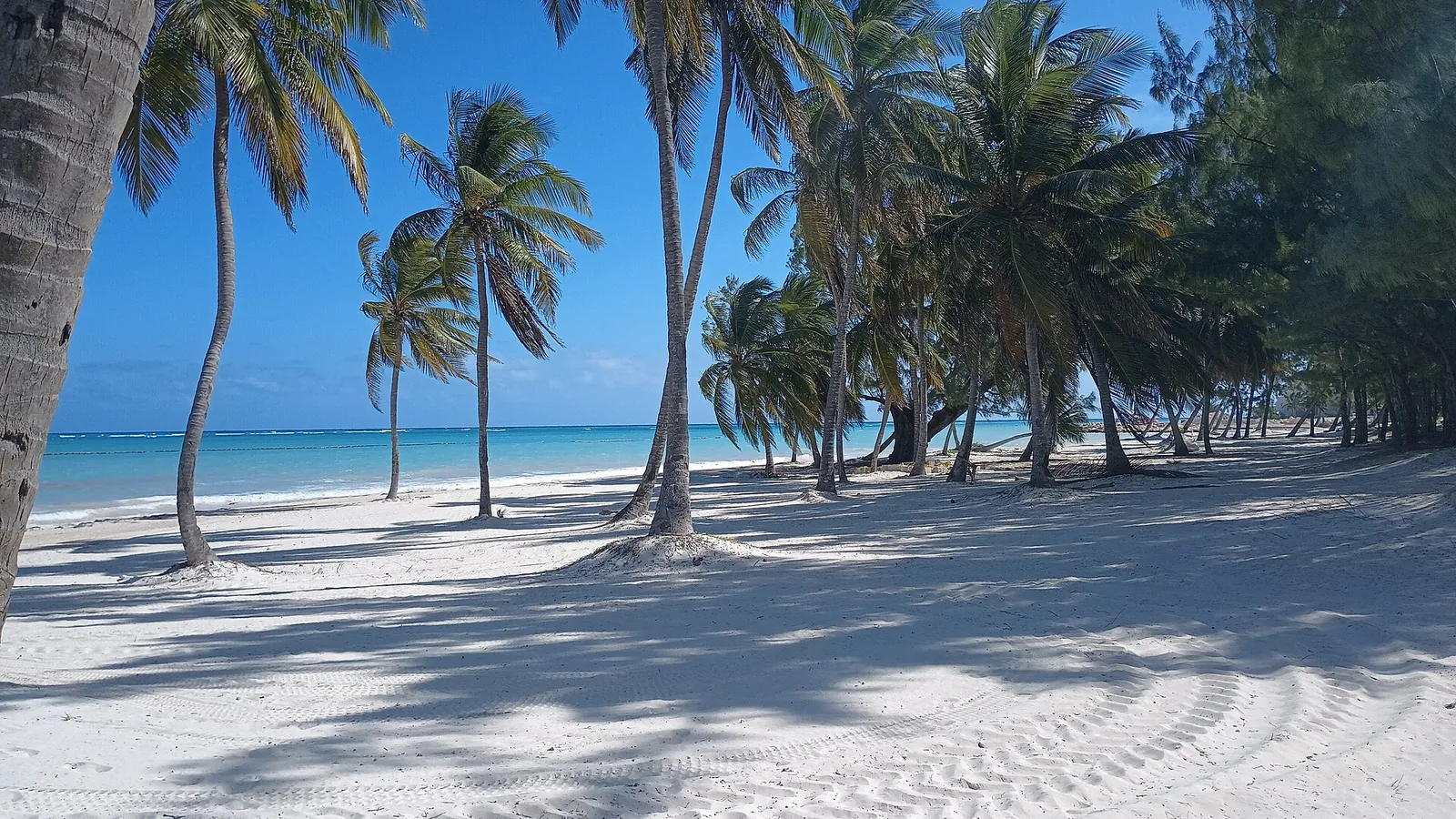
If the ski house sold the membership, the beach villa sold the second year of it. A winter week at altitude was one trip. A house on the water could be used at Thanksgiving, over spring break and again in July. Almost every club in the Destination Club News files kept at least one Caribbean property, and the reporting on those houses is some of the most detailed in the archive.
What follows reads several of those reports together, along with the story of a club that never got beyond its first house.
Square footage as a sales tool
The write-ups competed on size. The Élan Collection's Coral House in Turks and Caicos, featured in November 2010, ran to roughly 12,000 square feet: five bedrooms, two living rooms, a library, a formal dining room, and a separate guest cottage with its own pool. Antique wrought-iron gates had been brought in from France, Egypt and Saudi Arabia. The islands, the article noted, were a staple for many destination clubs, and readers had picked a Demeure property there the week before.
Equity Estates answered with Anguilla. Its new villa above Lover's Cove, described that same month, had four bedrooms, a heated infinity pool and a self-contained penthouse, about ten minutes from Shoal Bay. The club auctioned a week there for cancer research, valuing the package, first-class airfare for eight included, at an estimated $75,000. It was a neat piece of marketing: the house became the story, and the story said the club was buying while others were selling.
Quintess, meanwhile, was trying a different trick. In October 2010 its parent company, Club Holdings, introduced a second club called DUO, with residences across the United States, the Caribbean and Europe. The pitch was about price rather than size: DUO homes would average around $2 million in value, against roughly $4 million for a Quintess residence, with a planned occupancy of 65 to 75 percent. The picture the archive ran with the announcement was a house in Turks and Caicos. Even the budget version of a club needed an island villa on the front page.
One house and a plan
The Dominican Republic shows up in the archive more quietly, but it shows up early. The first Private Retreats press releases, preserved in the Abercrombie & Kent Destination Clubs file, list the Dominican Republic among the new destinations announced in January 2003. Seven years later, as Ultimate Escapes tried to keep selling memberships while its shares were suspended from the NYSE Amex, the club pointed to newly announced properties in Telluride, Florence and the Dominican Republic as evidence that it was still growing.
Then there is Diamante Residences, a Canadian club that launched in the summer of 2008 with exactly one property, a 7,700-square-foot home in the Dominican Republic. The plan was to add Scottsdale, New York, Naples and Palm Springs. Memberships were priced from $150,000 to $395,000, with annual dues from $8,000 to $29,000. By October the launch had been called off. "The concept is still valid but right now the timing is not," the club said, and its website came down soon afterwards.
It is easy to read Diamante as a footnote. It is more useful as a reminder of how much of the club pitch rested on the island house. One spectacular villa was enough to start selling memberships. It was nowhere near enough to run a club, because a member who pays for 30 or 45 nights a year expects a choice of places to spend them.
Getting from the airport to the gate
Property write-ups for mountain houses tended to list drive times to the airport. The Caribbean ones mostly did not, partly because on a small island the answer was obvious and partly because on a large one it was awkward. The Dominican Republic is the large case. Punta Cana's airport is the main gateway for the east coast, and the villa communities spread out along the shore from there, so the first decision on landing is whether to rely on transfers or rent a car at Punta Cana airport and keep the week flexible.
Club concierges used to settle that question for members before they left home. People renting a villa in the same region today settle it themselves, and the answer depends on where the house is. Guests staying further west, around La Romana and its resort coast, often find a car is the easiest way to reach beaches and restaurants outside the gate. The same is true of Cap Cana, just south of Punta Cana, where Juanillo Beach and Scape Park are a short drive from most of the rental houses.
The storm question
Every Caribbean house came with a season the brochures did not dwell on. In September 2010, after Hurricane Earl tracked up the Atlantic, Destination Club News asked Quintess how its residences had fared. "Quintess and members weathered the storm," the club replied, reporting minimal damage to the grounds thanks to quick work by its hosts. The same article laid out the club argument in its plainest form. Insurance premiums and deductibles on hurricane-coast property had climbed since Katrina, and a club member did not pay them directly. The cost was spread across everybody's annual dues.
That was true as far as it went. What it left out was that the club itself still had to carry those costs, and a club short of cash could not carry them for long. Ultimate Escapes members learned this within weeks of Earl, when their club filed for Chapter 11 estimating $100 million to $500 million in liabilities against $10 million to $50 million in assets.
Quintess, for its part, kept reporting. Its file in the archive includes membership plans, dues and usage rules from the period, and in January 2010 the site named it the first Destination Club of the Year, after a year spent moving the club toward a break-even model while rivals failed. Late in 2008 it had asked members to approve higher dues and a nightly occupancy fee, and 88 percent of those who voted said yes. For an industry under that much strain, a hurricane season with nothing worse than a tidy-up of the grounds was a good season.
What survives
Read now, the island reports are less about any single villa than about the distance between a house and the business behind it. Coral House and the Anguilla villa were real, carefully described properties. Diamante's Dominican home was real too. The question a prospective member needed to ask, and the one this site kept pressing its readers to ask, was who owned the house, who held the mortgage on it, and what would happen to the member's deposit if either answer changed.
The equity clubs tried to answer that question in their founding documents. Equity Estates, whose Anguilla villa opened this piece, was set up as a fund with an end date: its file in the archive notes a plan to sell its real estate about fifteen years after launch, beginning in 2021, and return the proceeds to members. A beach house held that way was an investment with a calendar attached, not a promise of sunsets forever.
The Quintess file and many others in the directory still carry their original property lists. They are best read not as shopping lists but as a record of what members were promised, and of how much of that promise was built on a handful of houses by the sea.